
The Great Salt Lake’s Future Requires Shared Responsibility

The first time I spent a day around Great Salt Lake, I was struck by its calmness. The light changed constantly, reflecting and refracting colors across the water, shoreline, sky and mountains. Birds moved in the distance, and the scale of the place made it feel less like an ordinary lake than a great inland sea. I left with a simple question: What am I really looking at?
That question led me to learn more about the lake, its history, wildlife, tributaries, communities and changing conditions. The more I learned, the more convinced I became that Great Salt Lake cannot be treated as somebody else’s problem. Its future touches wildlife, families, businesses, agriculture, public health, recreation, government and communities across the basin.
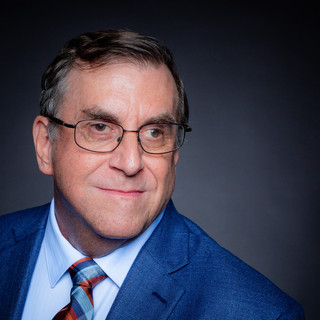
My conclusion is not based only on conservation concerns. It is also shaped by more than 31 years in business and finance, including audit and consulting work in public accounting and more than 24 years in executive leadership, service as a CFO and CEO of a metal fabrication company. I have also worked with state legislators in Tennessee from both business and ministry perspectives. Those experiences taught me that difficult problems involving legitimate but competing interests are rarely solved by blame, slogans or one-sided demands.
They are solved by leadership.
The first requirement is a common objective. Before stakeholders argue over methods, they need to agree on the destination. For Great Salt Lake, that destination should include a healthier lake and ecosystem, viable communities, a strong economy, responsible water use and a future in which people and wildlife can continue to depend on the basin.
The second requirement is to bring the people closest to the problem into the process. Scientists understand the physical system. Farmers understand the realities of food production and water use. Businesses understand investment, jobs and operating constraints. Public-health professionals understand risk. Conservation organizations understand habitat and species pressures. Government leaders understand law, public responsibility and implementation. Residents understand what it means to live with the consequences.
No one group has the entire picture.
Shared responsibility, however, does not mean equal responsibility. Different stakeholders have different impacts, resources, authority and ability to act. Fairness requires recognizing those differences while still asking every major participant what contribution it can reasonably make.
Trust is another essential ingredient. In business, I learned that people rarely give their best thinking when they believe the conclusion has already been decided and they have been invited only to receive instructions. The same principle applies here. If agriculture, business, conservation, government and communities enter the discussion assuming the others are enemies, durable solutions will be difficult to build.
That does not mean avoiding hard decisions.
Collaboration without accountability accomplishes little.
Goals need to be measurable.
Responsibilities need to be clear.
Progress needs to be tracked.
When actions are not working, they should be adjusted.
When new information changes our understanding, plans should change with it.

That is continuous improvement, and it applies beyond the factory floor.
We should also reject two false choices. One is that protecting Great Salt Lake requires ignoring economic reality. The other is that economic concerns justify postponing environmental responsibility indefinitely. Neither approach is sustainable. A lasting solution must survive ecological, economic, political and human realities at the same time.
Utah does not need every stakeholder to agree on every method. It does need enough agreement to move toward a shared destination.
Great Salt Lake belongs to no single interest. Its wildlife does not experience the lake separately from its water. Communities do not experience the basin separately from its economy. Businesses, farms and families do not exist outside the environment in which they operate.
Each interest is different, but the future is connected.
That is why I believe the future of Great Salt Lake requires shared leadership, shared accountability and shared responsibility. The measure of success will not be whether one side wins.